Showing posts with label Fossil. Show all posts

Tuesday, 12 February 2013

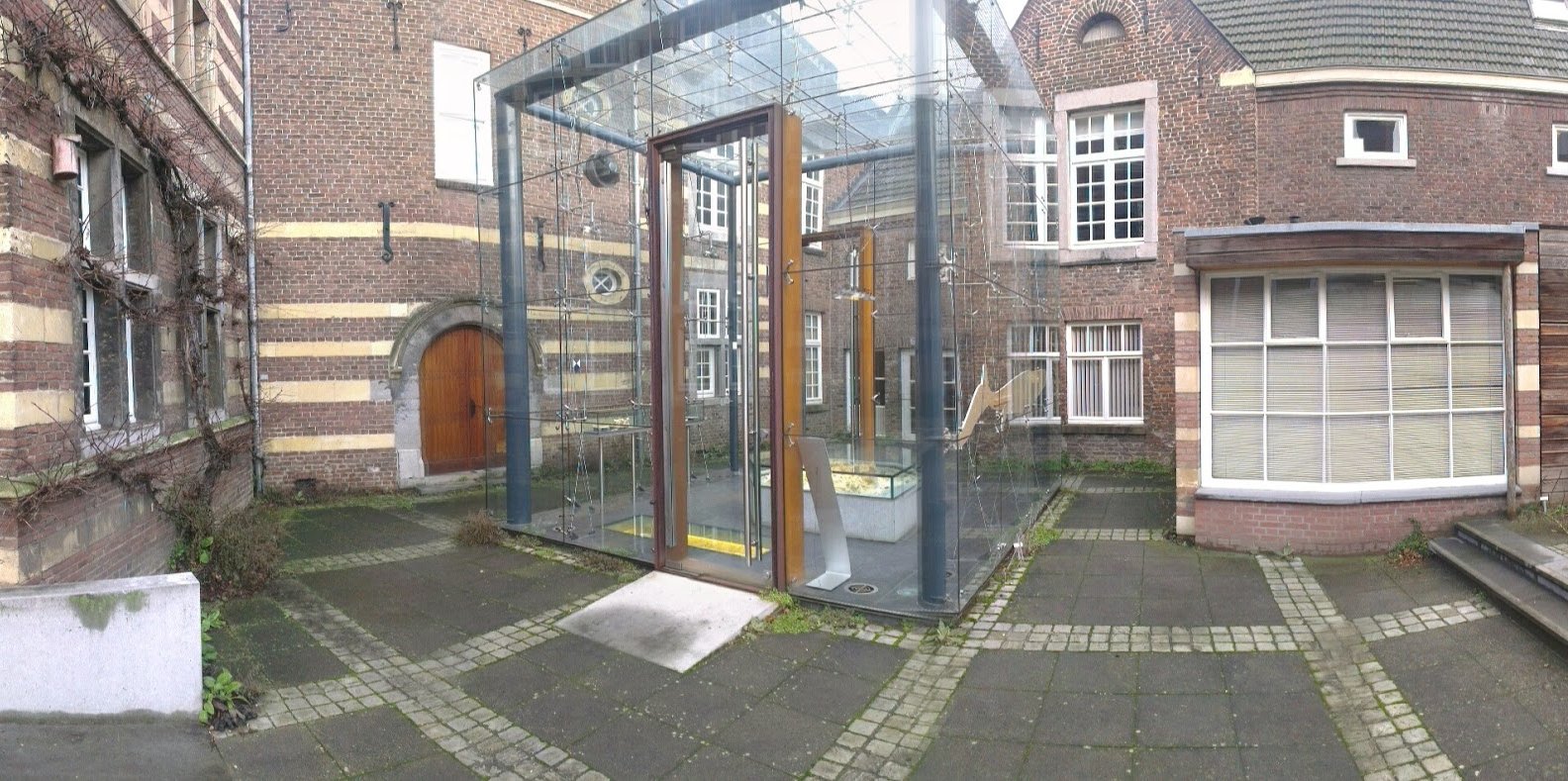
The Mosaleum

The Mosaleum (a contraction of Mosasaur and Mausoleum) is the last resting place of Bèr, a very large mosasaur discovered in 1998. You can just make out his skull in the middle.

The final resting place of a mosasaur named Bèr
The Mosaleum seen from the outside

The Mosaleum is a glass building situated just outside the main building of the NHMM in Maastricht, because it is completely made of glass it lets in a lot of natural light. 
The mosasaur in the "Mosaleum" is a large Prognathodon, that was given it's own species name saturator in 2002. And it's big, at 14 meters it's among the biggest of mosasaurs. 


Saturday, 9 February 2013

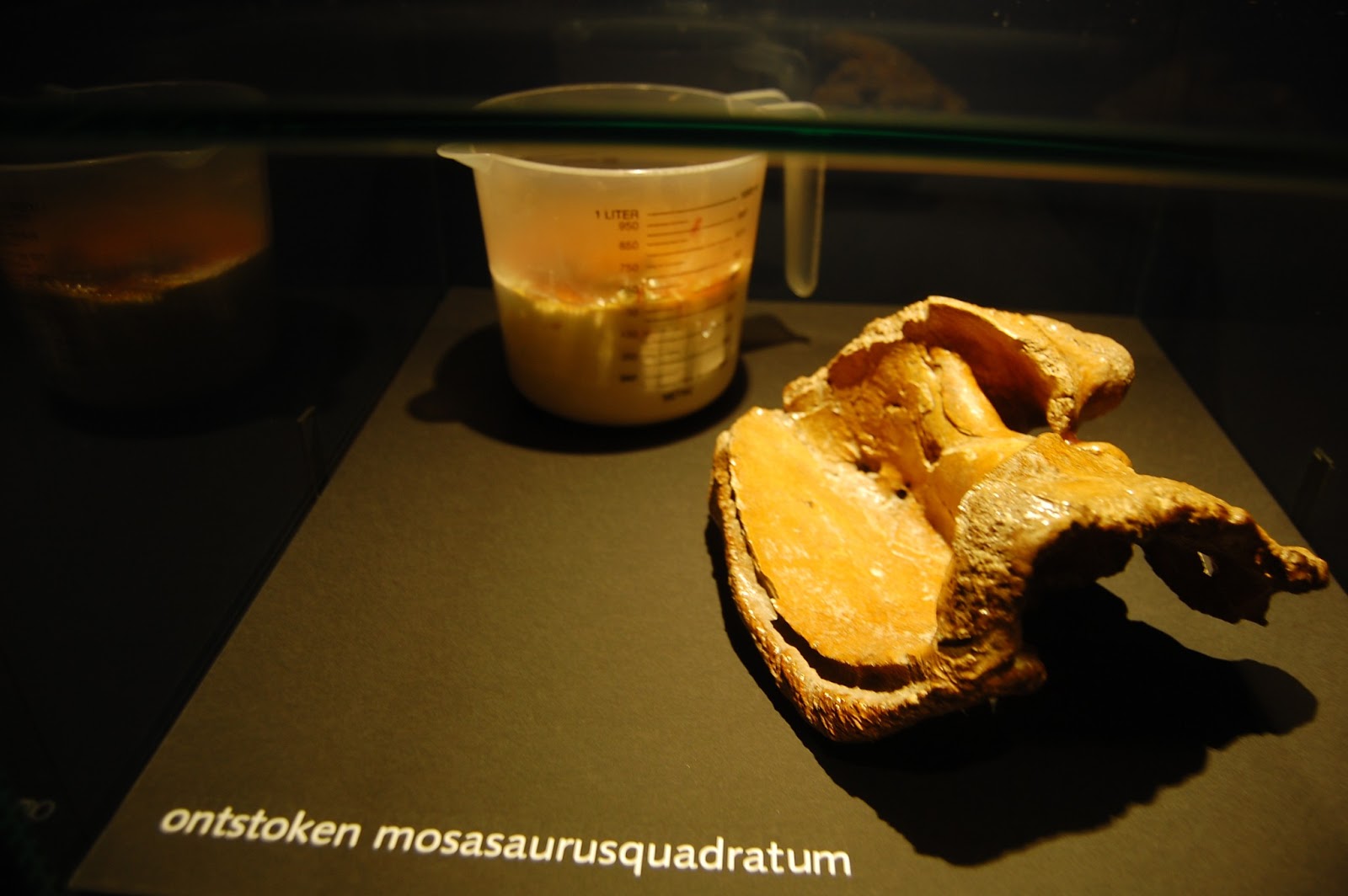
A 66 million year old infected bone

This is pretty much the first display you see when moving towards the Mosasaur exhibit, it may not look very impressive at first glance but it is rather neatly done.

And half a litre of goo
The infected mosasaur quadrate

The bone you see is a quadrate (I'll get to that), and it's definitely not looking healthy.

Wednesday, 6 February 2013

Mesozoic marsupial from Maastricht

For such a spectacular find the NHMM isn't giving us much to go on. Just a tiny, tiny tooth and a small reconstruction. No explanatory text, labels or anything. 
Good thing I came prepared. I had brought "De Nederlandse Dino" with me so I could finish it on my two hour train ride. As it happens the last chapters are on other Cretaceous finds, like this critter.


It's a really tiny tooth.
That black speck.. that's it.

The label clearly isn't much help here. The tooth is simply labelled 'mammal tooth' and the rat-like thing besides it doesn't even get it's own label. You might be surprised to hear it's from the Cretaceous. Good thing I read the chapter on this critter beforehand.

Tuesday, 5 February 2013

The Dutch Dinosaur

The Netherlands is not known as dinosaur country, and with good reason. For most of the Mesozoic the area that is now the Netherlands was covered in water. But sometimes a dinosaur died and ended up in the ocean, probably it fell in a river that flowed into the sea. Or maybe it was walking on the beach when it died.


The comb was inspired by Corythosaurus
It's a duck-billed dinosaur

Because such remains are so rare in the Netherlands all of bones would probably fit into a single display, if they were all in one place. They are unfortunately not all in the same place, but the NHHM in Maastricht has a relatively large number of them.